Saturday, July 4, 2020

Rudesheim


"Siegfrieds Mechanisches Musikkabinett has a large selection of automatic music instruments ranging from the tiniest music box to the giant Concert Piano Orchestrion. According to their brochure with an English section, “Siegfried Wendel collected and restored mechanical music instruments just for fun. 

But very soon his hobby developed into the first museum on this kind in Germany which opened in 1969. From the very beginning the aim was to make the tour in the museum into an unusual experience for the visitor. The instruments are actually played; information is given about how they work, where they were used, to the men who built them and about the role that they planned in the daily existence of people. 

The combination of music and old technology, together with the impression of being able to understand how these instruments make music, is guaranteed to fascinate visitors of all age groups.”


Anita Hicken was a quick study as she played this cool little hand organ for the group.


This organ was made in Germany and used in a carousel found in Turkey.


Kids nearby came running when we put a coin in this organ just outside the museum. 


Bruce and Maureen Allcott and Anita and Steve Hicken joined us for the day.


Joanne did buy a hat here, but not this one.
Whew!


Monday, June 29, 2020

Haguenau and Soufflenheim, France


First stop - getting our French chocolate!


Russ and Charmaine Anderson were up for a last minute trip to France on a Monday!


Caught indulging in a long awaited French pastry.


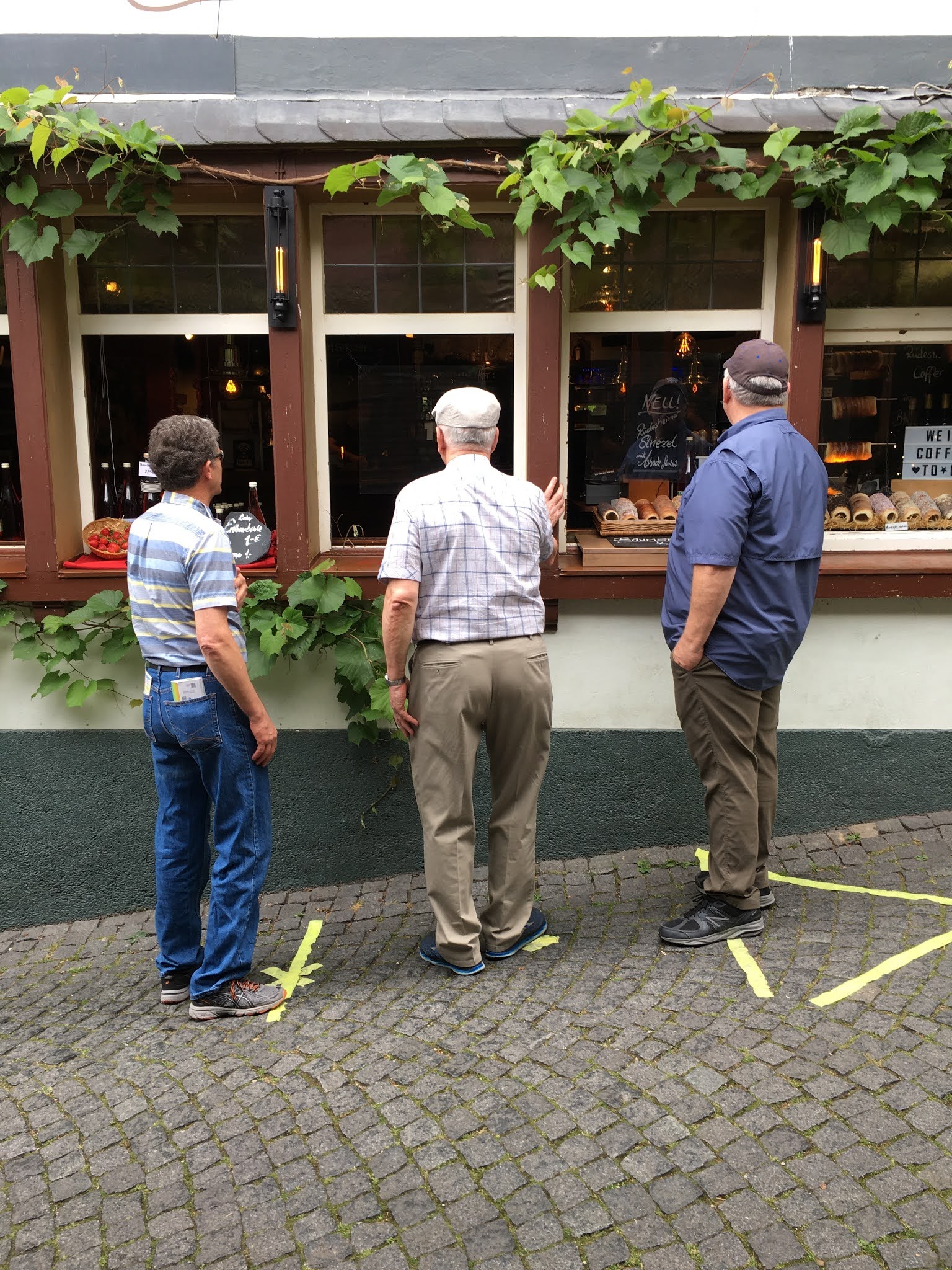
Social distancing signage.


Lunch did not disappoint.


We made out pretty well for a quick day trip to France!


Saturday, June 27, 2020

Felsenmeer - River of Rock


Many people call this place the "River of Rock".  It is a very unusual geologic formation with very large granite boulders rounded like rocks you'd see in a river.  However, there is no river.  These have been pushed up by geologic movement of the earth and exposed.  It wasn't caused by a landslide.


It was a warm day but enjoyed the hike up the hill on this shaded path.  The people on the boulders give some scale to their size.


During the Roman occupation of this region of Germany in the years 100-300AD, these boulders were quarried and cut by means such as this.  The Romans built many fortifications to protect the perimeter of their empire and needed rock.


At one point, the history of this area shows they had as many as 800 people employed here cutting granite for use in buildings, church, and roads.


This perseverance of this tree to survive in the midst of nothing but rocks is remarkable.  There has to be a metaphor there somewhere.


Two big
mushrooms

The view walking down from the hill.


Saturday, June 20, 2020

Koblenz


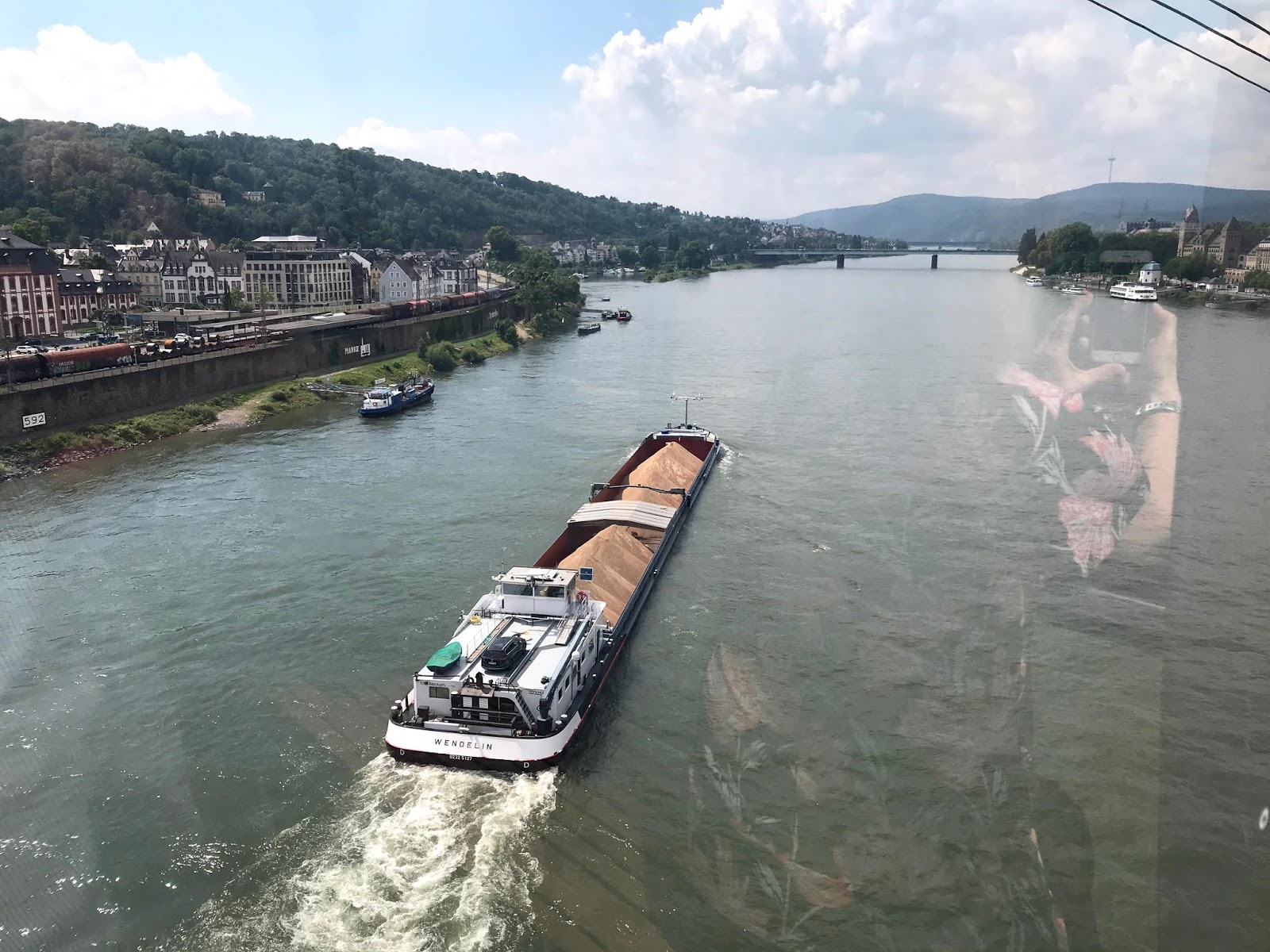
This huge fortress kept control of this very important trade route where two major rivers join for centuries.  The Rhine River flows from the mountains of Switzerland all the way to the North Sea through the Netherlands.


We took a tram across the Rhine up to the castle, what a view!


The Rhine and the Mosel rivers meet at this 2000-year-old town, located at the northern end of the most scenic section of the Rhine.


The fortress has been used for centuries and is now a popular tourist destination with multiple museums.


The picture above is a large mechanical crossbow which would have been used in defense of the fort through the holes cut into the fortress walls.  Ouch!


Yet another high water mark of different floods over the years.


This is a fascinating fountain the center of the city.  It depicts the history of the area as illustrated in the sign near the fountain.


After we had our own Sacrament meeting and check out of the hotel, we walked around the town. We heard the bells of this church and realized that a service was about to start. We decided to join in even though it was in German. Social distancing was observed.